Your car battery plays an important role in starting your vehicle and powering its electrical systems. If the battery weakens, you may notice slow engine cranking, dim headlights, or trouble starting your car in the morning.
The good news is that you can check your car battery health with a few simple checks at home. You do not always need professional equipment to identify early warning signs. However, some tests require a multimeter or a professional battery tester to confirm whether the battery needs charging or replacement.
In this guide, you will learn how to check your car battery health step by step, what voltage readings mean, how to recognise a failing battery, and when to seek professional help.
Why Is It Important to Check Your Car Battery Health?
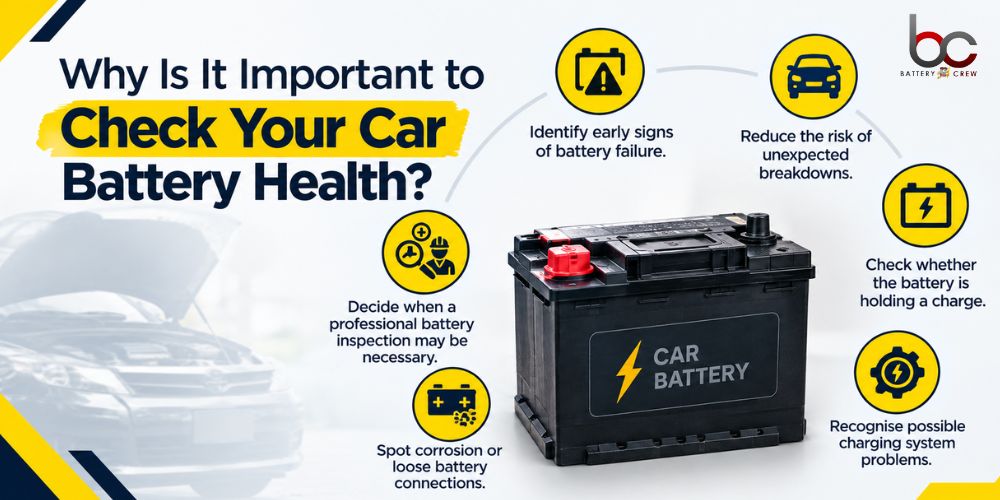
A weak battery can leave you stranded when you least expect it. Regular checks help you identify potential problems before your car refuses to start.
Checking your battery health can help you:
- Identify early signs of battery failure.
- Reduce the risk of unexpected breakdowns.
- Check whether the battery is holding a charge.
- Spot corrosion or loose battery connections.
- Recognise possible charging system problems.
- Decide when a professional battery inspection may be necessary.
If you want to keep your battery in good condition, read our guide to car battery care and maintenance.
7 Simple Steps to Check Your Car Battery Health
1. Look for Visible Signs of Damage
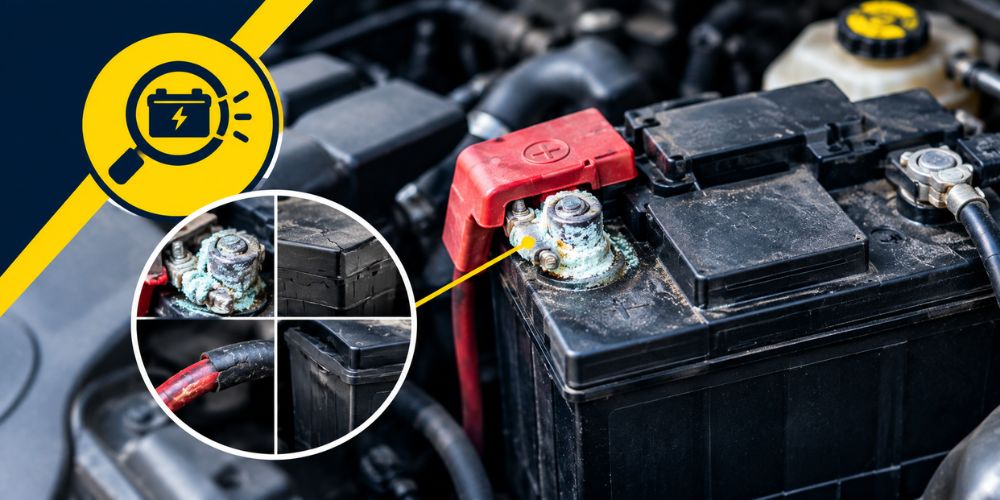
Start by inspecting the battery under the bonnet. Make sure the engine is switched off and the vehicle is parked safely before you begin.
Look for:
- Cracks or damage to the battery casing.
- Bulging or swollen sides.
- Signs of battery fluid leakage.
- Corrosion around the battery terminals.
- Loose or damaged cables.
A damaged or leaking battery should not be handled unnecessarily. Avoid touching any leaking fluid, and arrange a professional inspection.
If the battery looks swollen, cracked, or damaged, do not attempt to test or recharge it yourself.
2. Check the Battery Terminals for Corrosion
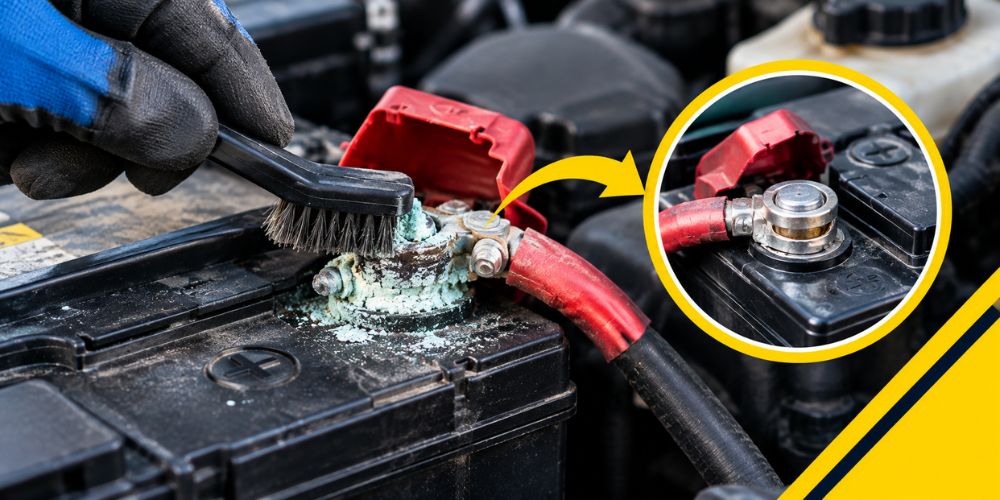
Battery terminals connect the battery to your vehicle’s electrical system. Corrosion around these connections can interfere with the flow of electricity and cause starting problems.
You may notice white, blue, or greenish deposits around the terminals. The battery cables may also appear loose or damaged.
Corrosion does not always mean that the battery itself has failed. Sometimes, cleaning or repairing the connections can resolve the problem.
Avoid cleaning the terminals while the battery is connected unless you know the correct safety procedure. If you are unsure, ask a professional to inspect them.
Battery Crew provides battery-related assistance, including battery post repair and replacement, when damaged or corroded connections need attention.
3. Check How Your Car Starts
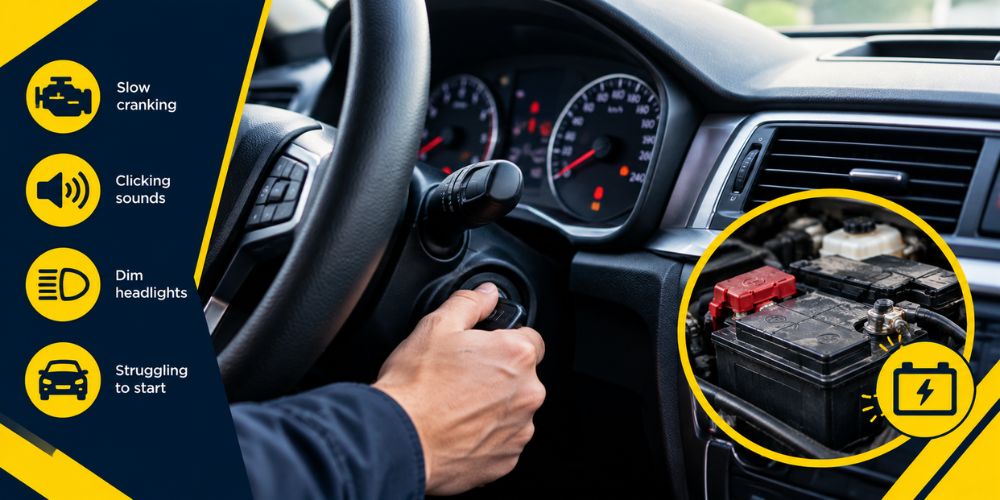
One of the simplest ways to assess battery condition is to pay attention when starting your vehicle.
A healthy battery should normally provide enough power for the engine to crank promptly. A weak battery may cause the engine to turn over more slowly than usual.
Common warning signs include:
- The engine cranks slowly.
- You hear clicking when turning the key or pressing the start button.
- The dashboard lights flicker during starting.
- The vehicle starts inconsistently.
- You need repeated jump-starts.
These symptoms can indicate a weak battery, but they do not confirm battery failure on their own. Loose connections, a faulty starter motor, or a charging system problem can cause similar symptoms.
If your vehicle repeatedly struggles to start, have the battery and related electrical components checked.
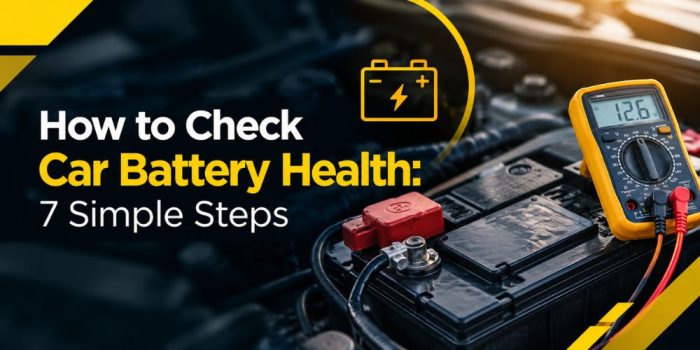
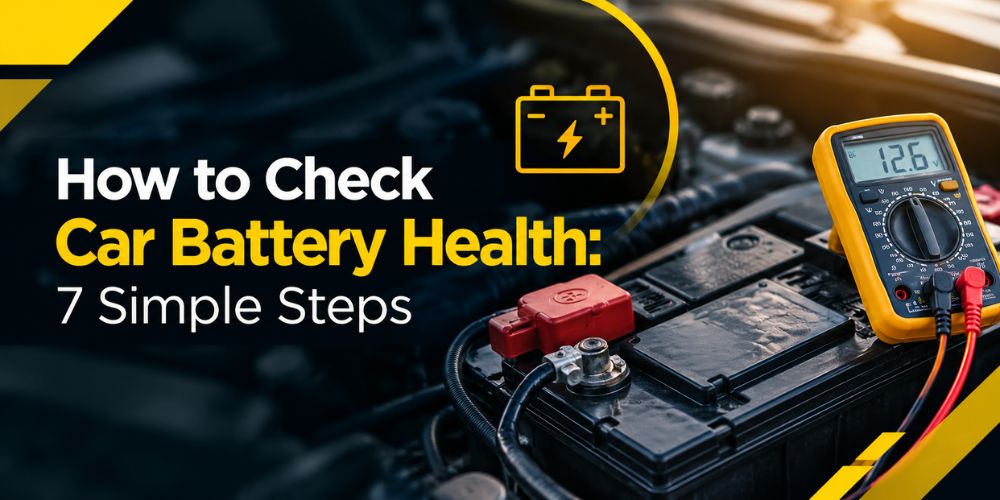
4. Test the Battery Voltage With a Multimeter
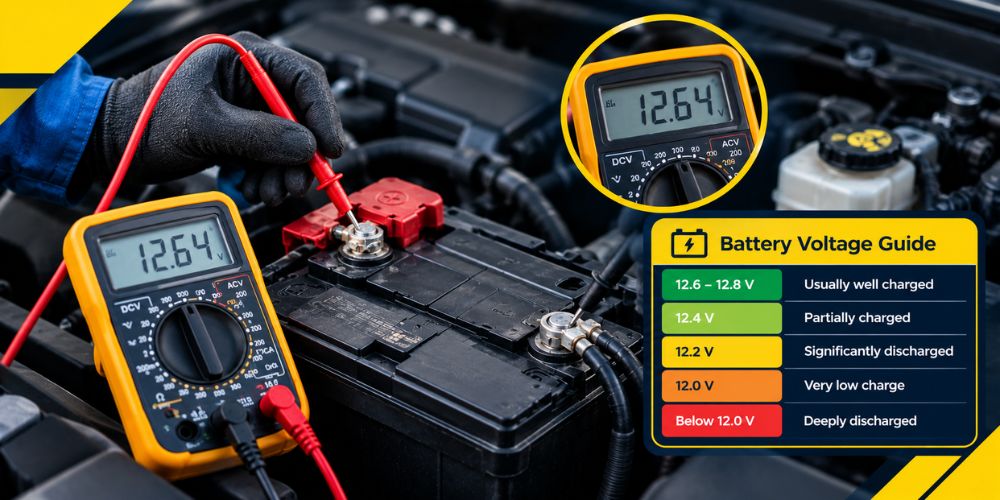
A digital multimeter can help you check your car battery’s voltage. For a conventional 12-volt lead-acid car battery, a voltage reading taken with the engine off can provide a useful indication of its state of charge.
For a more meaningful reading, switch off the engine and electrical accessories, then allow the battery to rest before testing it.
Follow these steps:
- Set the multimeter to DC voltage.
- Connect the red probe to the positive battery terminal.
- Connect the black probe to the negative battery terminal.
- Read the voltage displayed on the screen.
- Compare the result with the general guide below.
General voltage guide for a 12-volt lead-acid battery at rest:
| Voltage reading | General indication |
| Around 12.6V to 12.8V | Usually well charged |
| Around 12.4V | Partially charged |
| Around 12.2V | Significantly discharged |
| Around 12.0V or lower | Very low charge |
These values are approximate. The correct interpretation depends on the battery type, temperature, recent driving, and whether the battery has had enough time to rest.
A low voltage reading does not automatically mean the battery must be replaced. It may simply need charging. If the battery repeatedly loses charge, further testing may be needed to determine whether the battery is failing or another vehicle component is causing the issue.
Safety tip: Do not allow the multimeter probes to touch each other while connected to opposite battery terminals. Never use the multimeter’s current setting directly across the battery terminals.
5. Check the Alternator and Charging System
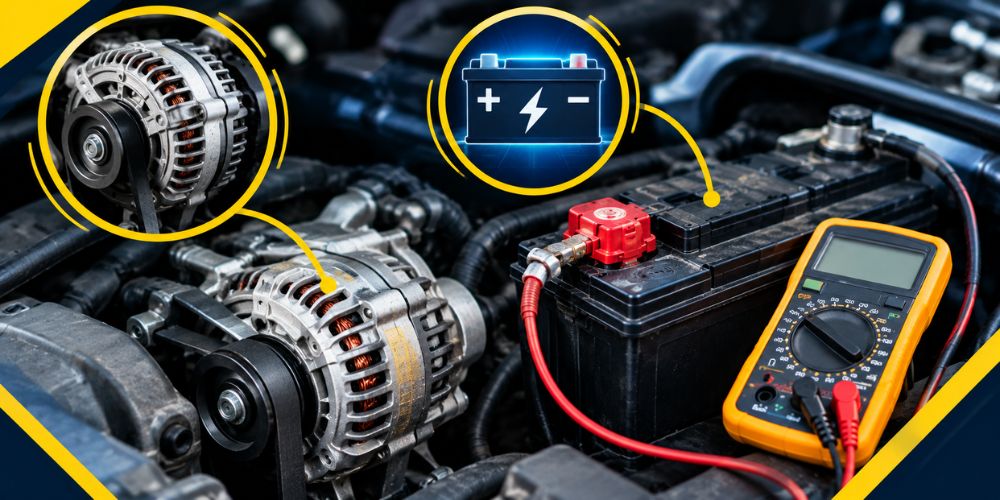
Your car’s alternator helps recharge the battery while the engine is running. If the charging system is not working correctly, even a relatively new battery may become discharged.
Possible warning signs include:
- A battery warning light on the dashboard.
- Headlights that become unusually dim or fluctuate.
- Repeated battery discharge.
- Electrical accessories behaving inconsistently.
- Starting problems despite recently charging or replacing the battery.
A multimeter reading with the engine running can offer some information about charging performance, but modern vehicles use different charging strategies. The expected voltage can vary depending on the vehicle, battery type, temperature, and electrical load.
For this reason, one voltage reading is not enough to diagnose an alternator problem. A proper charging system test is a better way to identify the cause.
If your battery keeps going flat, ask a professional to check both the battery and the vehicle’s charging system before replacing parts unnecessarily.
6. Consider the Battery’s Age
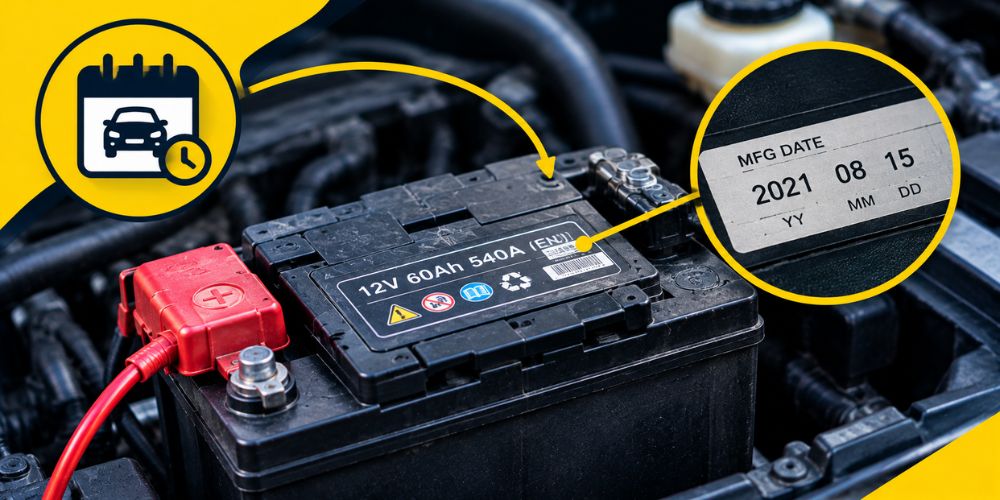
Car batteries do not last forever. Their lifespan depends on the battery type, driving habits, weather conditions, maintenance, and the vehicle’s electrical demands.
Frequent short trips, long periods without driving, extreme temperatures, and repeated deep discharges can contribute to battery wear.
Check the battery label or service records to find out when it was installed. If the battery is several years old and you are noticing starting problems, it may be time to arrange a battery health test.
Age alone does not prove that a battery has failed. A battery test can help determine whether it is still performing adequately or whether replacement should be considered.
7. Get a Professional Battery Health Test
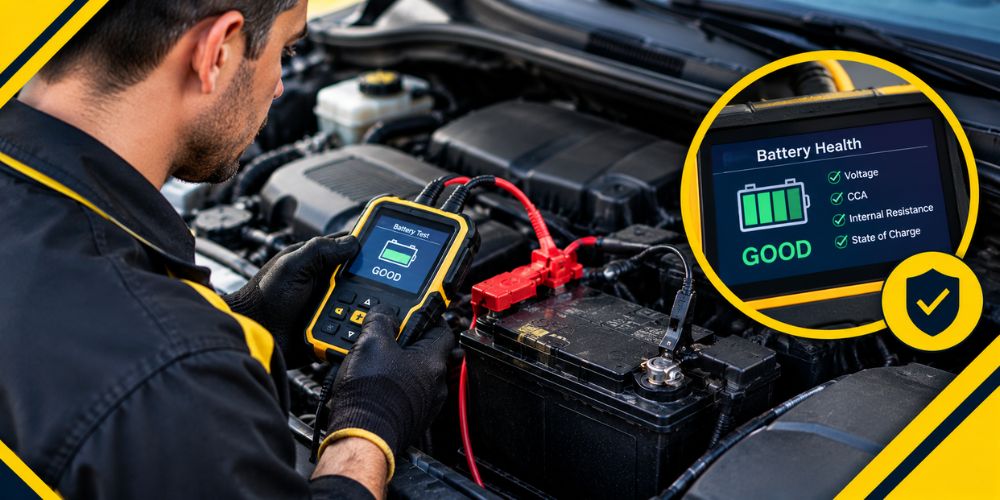
Visual inspections and voltage checks can help identify possible problems, but they cannot tell you everything about a battery’s condition.
A professional battery test can assess factors such as the battery’s available starting power and its ability to perform under load. Depending on the results, the technician may also check the charging system, terminals, cables, and other possible causes of starting trouble.
Professional testing is especially useful if:
- Your battery repeatedly goes flat.
- Your vehicle needs frequent jump-starts.
- The engine struggles to start even after charging.
- The battery voltage looks normal, but starting problems continue.
- You are unsure whether the battery needs charging or replacement.
Battery Crew offers battery assistance and inspections. Visit the official Battery Crew website to learn more about its services.
What Are the Common Signs of a Weak Car Battery?
Recognising the warning signs early can help you avoid an unexpected breakdown.
Here are some common symptoms to watch for:
Slow engine cranking: The engine turns over more slowly than usual when you try to start the vehicle.
Clicking sounds: You hear repeated clicking when attempting to start the car.
Dim headlights: The headlights or interior lights appear weaker than usual, particularly when starting the engine.
Battery warning light: A warning light appears on the dashboard. This can indicate a charging system issue rather than a failed battery alone.
Repeated jump-starts: The car starts with assistance but struggles again later.
Visible corrosion or damage: You notice deposits around the terminals, a damaged casing, or signs of leakage.
One symptom on its own does not always mean the battery needs replacing. Testing helps establish whether the battery is the actual cause.
How Can You Make Your Car Battery Last Longer?
Good battery care can help reduce avoidable problems and support reliable starting.
Follow these simple practices:
- Keep the battery terminals clean. Corrosion can interfere with electrical connections.
- Check that the battery is secure. Excessive movement and vibration can damage the battery or its connections.
- Avoid leaving electrical accessories switched on. Interior lights, headlights, and other accessories can drain the battery when the engine is off.
- Drive regularly when practical. Long periods without driving may allow the battery to lose charge.
- Pay attention to repeated starting problems. Do not ignore symptoms that keep returning.
- Inspect the battery periodically. Look for corrosion, loose connections, and visible damage.
- Arrange testing when necessary. A battery that repeatedly loses charge should be checked rather than repeatedly jump-started.
For more practical advice, see our guide to car battery care and maintenance.
When Should You Replace Your Car Battery?
Battery replacement may be necessary when testing shows that the battery can no longer provide adequate starting power, cannot hold a charge, or has physical damage that makes it unsafe to use.
Before replacing it, make sure the battery is the real cause of the problem. An alternator fault, parasitic electrical drain, damaged terminal, or starter motor issue can produce similar symptoms.
When selecting a replacement, check that the battery matches your vehicle’s specifications, including the correct size, terminal arrangement, capacity, and starting requirements.
If you need help with battery removal or fitting, visit Battery Crew’s page for battery removal and installation.
Frequently Asked Questions
How do I check my car battery health at home?
You can start by checking the battery casing, terminals, and cables for visible damage or corrosion. Pay attention to how the engine starts. If you have a multimeter, you can also measure the voltage of a conventional 12-volt battery while the engine is off.
These checks provide useful clues, but a professional test may be needed to confirm the battery’s actual condition.
What voltage should a healthy car battery show?
A fully charged conventional 12-volt lead-acid battery often reads around 12.6V to 12.8V after resting. Readings vary with battery type, temperature, and other conditions, so voltage should be treated as a guide rather than a complete health assessment.
Can a car battery show normal voltage but still be faulty?
Yes. A battery may show a reasonable resting voltage but still struggle to deliver enough current to start the engine. A load or conductance test can help assess its starting performance.
How often should I check my car battery?
It is sensible to inspect the battery periodically and whenever you notice starting problems, warning lights, or repeated discharge. A professional check may also be useful before a long trip or if the battery is getting older.
Does a weak car battery always need replacing?
No. A battery may simply be discharged and could recover after proper charging. However, if it cannot hold a charge or fails a suitable battery test, replacement may be necessary. The charging system and electrical connections should also be checked when problems keep returning.
Why does my car battery keep going flat?
Possible causes include an ageing battery, a charging system problem, loose or corroded connections, frequent short trips, or an electrical component that continues drawing power while the car is parked. Testing can help identify the actual cause.
Get Help With Your Car Battery
Checking your car battery health regularly can help you spot warning signs before they turn into an unexpected breakdown. Start with a visual inspection, pay attention to how your vehicle starts, and use a multimeter if you know how to test the battery safely.
If the battery repeatedly loses charge or you are unsure about its condition, a professional inspection can help you decide what to do next.
Battery Crew serves customers in areas including Midrand, Pretoria, and Randburg. To learn more about its services or arrange assistance, visit the official Battery Crew website or use the contact page.
A simple battery check today could help you avoid starting trouble tomorrow.